
Airflow Measurement for Nuclear Power Plants
Accurate airflow measurement is essential to the safe and compliant operation of nuclear power plants. From control room pressurization to containment ventilation and exhaust systems, even small measurement errors can impact performance, documentation, and operator confidence. Many conventional instruments are susceptible to drift and reduced accuracy over time, creating uncertainty in critical airflow data.
Air Monitor provides high-accuracy, low-drift airflow measurement solutions designed for nuclear environments. With proven sensing technology, stable transmitter performance, and robust quality assurance, Air Monitor delivers reliable, traceable data that supports confident operation and regulatory compliance.
Speak With an Application Engineer
With Air Monitor Solutions, You Gain
Proven Accuracy & Long-Term Stability
Air Monitor’s advanced sensing technology and drift-resistant transmitters deliver highly accurate, repeatable measurements over time — even in low differential pressure applications — reducing uncertainty and minimizing recalibration needs.Confidence in Critical Operations
Stable, non-pulsating airflow signals enable operators to trust system data in real time, eliminating second-guessing and supporting faster, more confident decision-making during normal and emergency conditions.Regulatory-Ready Performance
With AMCA-certified accuracy and NIST-traceable calibration, Air Monitor solutions provide the documentation and measurement credibility required to support audits, inspections, and long-term compliance.Nuclear Power Plant Airflow Measurement Products
ACCU-flo/NP — High-Accuracy Inline Airflow Measurement Station
The ACCU-flo/NP is used in nuclear power plants as a permanent inline airflow measurement station for auxiliary building ventilation, control room supply air, and other safety-class duct applications requiring verified flow data. Installed in ductwork from 4″ to 30″, it serves as the primary element for continuous monitoring and control.
Its honeycomb straightener, precision nozzle, and Fechheimer Pitot multi-point sensing deliver up to ±0.5% accuracy in turbulent, multi-directional flow conditions, eliminating the need for long upstream straight runs. Constructed from Type 316 stainless steel and rated to 900°F, it is built for long-term performance in demanding nuclear environments.

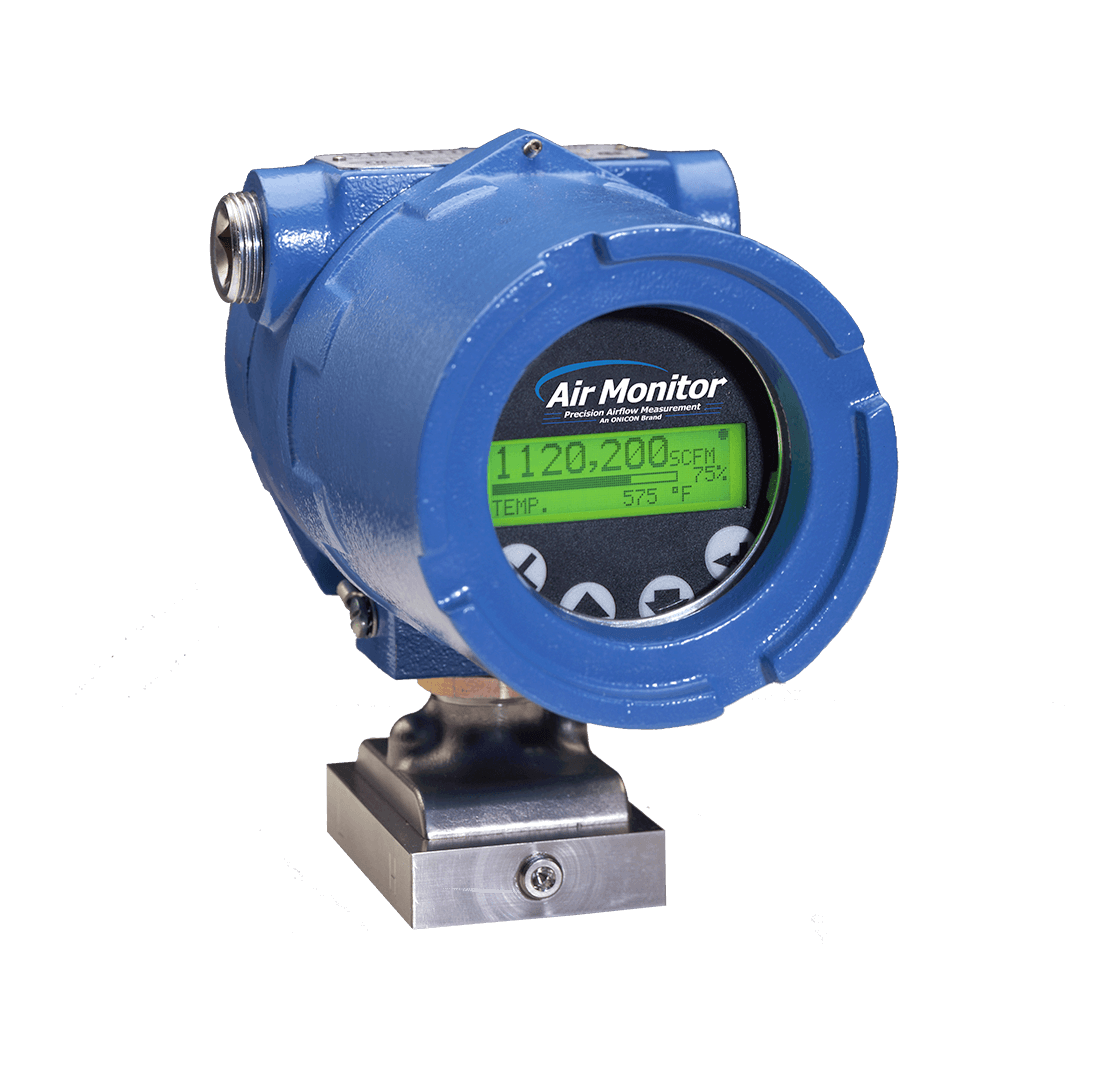
VELTRON DPT-Plus — Multivariable Differential Pressure Transmitter
The VELTRON DPT-Plus is used in nuclear power plants as the primary differential pressure transmitter for Air Monitor flow elements such as ACCU-flo, VOLU-probe, and CA Station systems, converting low-level differential pressure signals into calibrated flow outputs for plant control system integration. It delivers ±0.1% of Natural Span accuracy with a 100:1 turndown ratio for reliable performance at very low differential pressures.
Its AUTO-zero function continuously corrects drift from thermal, mechanical, and electronic influences, reducing recalibration requirements. Rated NEMA 4X and suitable for Class I Div 1 and Class II Div 1 hazardous locations, it provides stable performance in safety-related applications.
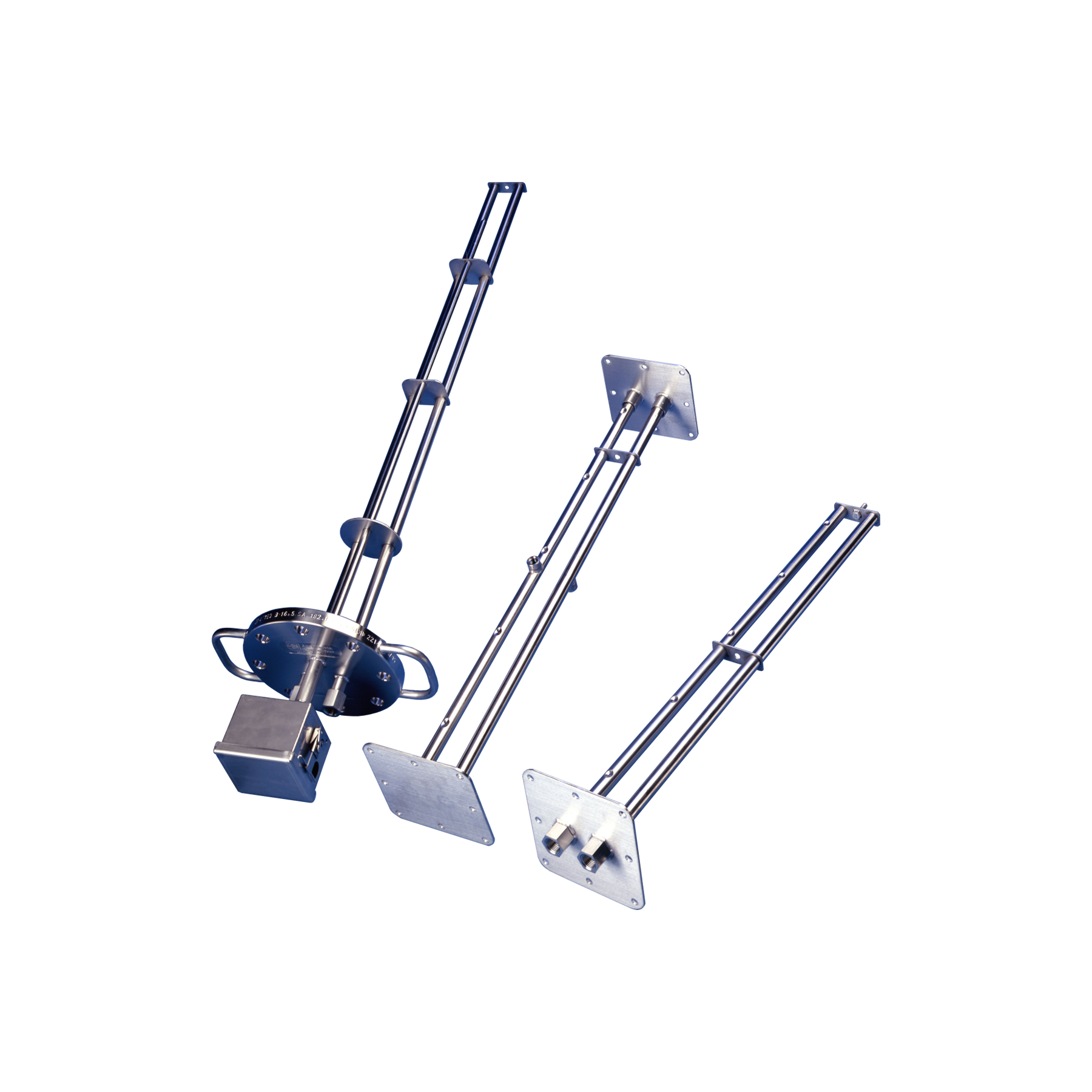
VOLU-probe/SS — Stainless Steel Insertion Airflow Traverse Probe
The VOLU-probe/SS is used in nuclear power plants as an insertion probe array for airflow measurement in large HVAC ducts, including containment purge, auxiliary exhaust, and nuclear island air systems where multi-point traversing is required. It mounts via threaded or flanged connections and can be removed for inspection without duct opening.
Constructed from stainless steel and high-performance alloys, it withstands temperatures up to 900°F and harsh airstream conditions with minimal airflow resistance. Its multi-point sensing is insensitive to pitch and yaw up to ±30°, enabling reliable performance in turbulent duct environments with approximately ±2% accuracy.
S.A.P. (Static Air Pressure Sensor) — Room and Space Pressurization Monitoring
The S.A.P. (Static Air Pressure Sensor) is used in nuclear power plants to monitor differential static pressure between rooms and zones, including control rooms, auxiliary buildings, and containment access areas, supporting pressure cascades that prevent contaminated air migration. It provides continuous, stable low-pressure measurement for safety and compliance.
Its integral volume chamber and sensing ports suppress HVAC-induced pulsations, delivering a steady signal for reliable alarming and control. With ±1% accuracy, resistance to airflow up to 1,000 FPM, and durable aluminum or stainless steel construction, it supports tight control room pressurization requirements (~0.125″ w.c.).

Key Challenges in Nuclear Airflow Measurement
Airflow measurement in nuclear power plants is inherently complex due to duct layouts that rarely provide adequate straight run, resulting in turbulent, multi-directional flow conditions that can reduce the accuracy of conventional instruments. These installation constraints make reliable measurement especially difficult in safety-critical HVAC systems.
In addition, many nuclear applications operate at extremely low differential pressures where even minor transmitter drift can impact accuracy. Instruments must also maintain long-term stability while withstanding harsh environmental conditions and meeting strict requirements for calibration traceability and regulatory documentation.

Evolving Requirements in Modern Nuclear Facilities
Nuclear airflow measurement requirements continue to evolve with new regulatory expectations and system upgrades. Post-Fukushima requirements, including Filtered Containment Venting Systems (FCVS), have increased the need for accurate, controllable flow measurement during both normal and accident conditions.
At the same time, new nuclear development—including Small Modular Reactors (SMRs)—is driving greater emphasis on early integration of high-accuracy instrumentation designed to meet modern QA standards such as NQA-1 and 10 CFR Part 50 Appendix B. Early design-stage planning helps ensure long-term compliance, performance, and reliability.

Nuclear Power Plant Airflow FAQs
How do Air Monitor solutions improve measurement reliability in nuclear applications?
Air Monitor products are designed to maintain accuracy in real-world nuclear conditions using multi-point sensing, flow conditioning, and drift-resistant transmitter technology. Features such as AUTO-zero correction and angular flow tolerance help ensure stable, repeatable measurements even in turbulent ductwork and low-pressure applications.
How do installation conditions impact airflow measurement accuracy in nuclear plants?
Installation conditions have a major impact on measurement accuracy because nuclear HVAC systems rarely provide ideal duct configurations. Limited straight run, bends, transitions, and fan discharge effects create turbulent, non-uniform flow profiles that can significantly distort readings from conventional single-point instruments. These real-world conditions require multi-point sensing and flow conditioning approaches to maintain reliable, repeatable airflow data in safety-critical systems.
Why is regulatory traceability important for nuclear airflow measurement systems?
Nuclear facilities must maintain strict documentation and calibration traceability to meet NRC and internal safety requirements. Air Monitor systems provide AMCA-certified performance data and NIST-traceable calibration records, supporting audit-ready documentation and helping ensure compliance during inspections, licensing, and safety reviews.
News & Innovation
Fully-Metered Boiler Combustion Control vs. Parallel Positioning Systems
Advanced combustion control systems offer solutions to improve boiler performance and reduce emissions.White Paper on Improved Industrial Combustion Processes
Learn how advanced combustion airflow measurement techniques can cut costs and boost efficiency.Product Brochures & Catalog Sheets
Explore our downloadable product brochures, catalog sheets, and other essential documents.-
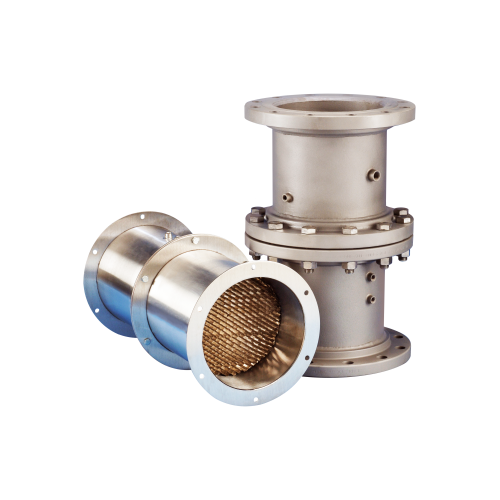
ACCU-flo
Inline Airflow Measuring Station
Flow straightening paired with differential pressure flow measuring probes to fit in tight installation points with optimal accuracy.
200 to 5,000 FPM
- Accuracy: 0.5% of Actual Flow
- Pipe Sizes: 4” to 30”, custom available
- Temperature: ≤900°F
- Carbon steel, Stainless steel
- Built-in flow conditioning
-
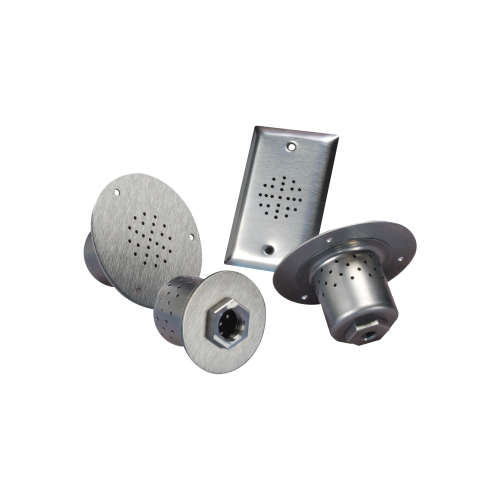
S.A.P.
Static Air Pressure Sensor
Area or critical space pressure sensors engineered for challenging industrial environments.
Area and Space Pressure
- Accuracy: 1% of actual static pressure
- Temperature: ≤200°F
- Stainless steel
- Variety of mounting options
- Unaffected by air currents
-
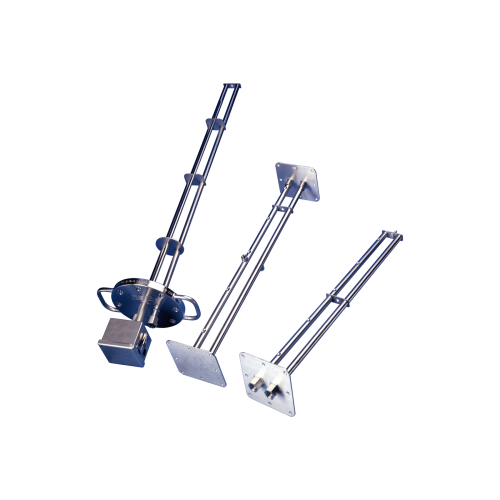
VOLU-probe/SS
Insertion Airflow Measuring Probes
Stainless steel airflow traverse probe ideal for dirty applications with corrosive, abrasive, and extreme temperatures.
400 to 10,000 FPM
- Accuracy: 2% of Actual Flow
- Temperature: ≤900°F
- Stainless steel, Hastelloy, Inconel, Kynar
- External or Internal mounting
- Easy installation/removal for maintenance
-
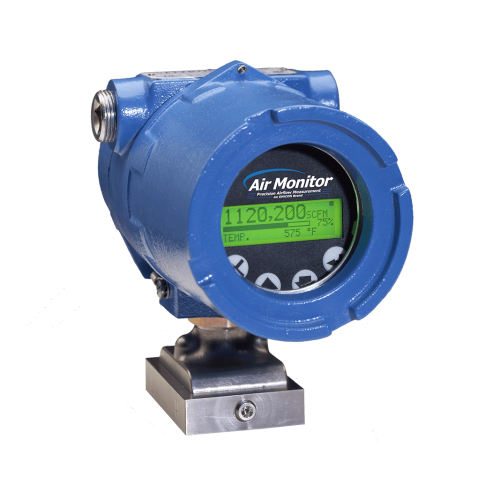
VELTRON DPT-Plus
Multivariable Transmitter
Measures differential pressure and process temperature providing output of calculated mass flow.
Flow, Temperature, or Differential Pressure
- Accuracy: 0.1%
- URL down to 0.05” w.c.
- NEMA 4X
- Class I Div 1, Class II Div 1
- 24VAC, 24VDC