
Part 1: Understanding Pitot Averaging Technology for Industrial Airflow Measurement
Industrial facilities handling cement, materials, or process gases face a critical challenge: accurately measuring airflow through dust-laden, particle-heavy air streams while maintaining sensor reliability and measurement accuracy. Standard airflow measurement devices often fail or degrade rapidly in these harsh environments, leading to missed process control, regulatory non-compliance, and unexpected downtime. Air Monitor’s pitot averaging flow stations paired with the AUTO-purge III system deliver a robust, engineered solution specifically designed to overcome these obstacles, providing continuous, accurate airflow monitoring even in the most demanding industrial conditions.
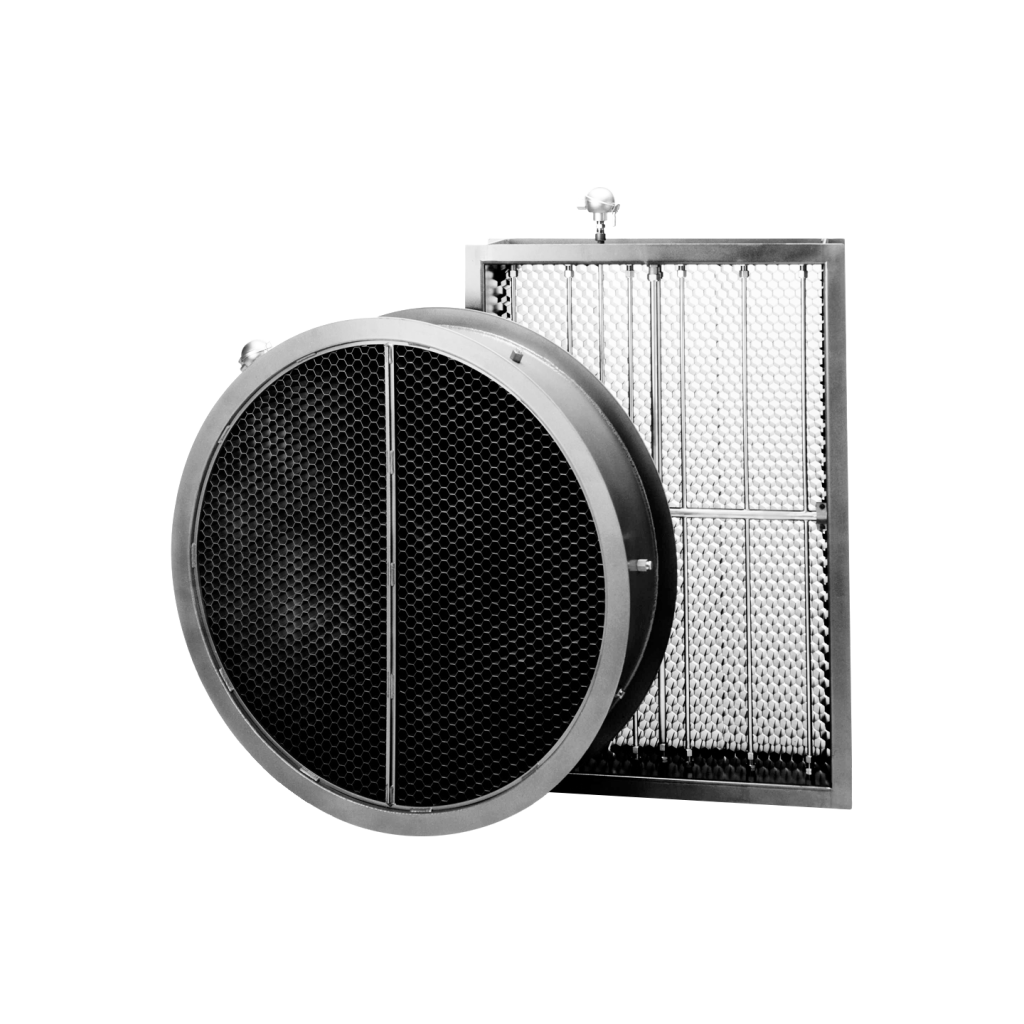
How Pitot Technology Measures Airflow
Pitot tubes measure airflow velocity by sensing the difference between dynamic pressure (total pressure) and static pressure in a moving air stream. This fundamental principle has remained reliable for over a century, making it an industry standard for airflow measurement.

Traditional single-point pitot measurements can be unreliable because they only capture velocity at one location within the duct. In contrast, averaging pitot probes incorporate multiple pressure taps positioned at mathematically defined locations across the pipe or duct cross-section, automatically averaging velocity readings to account for non-uniform flow profiles typical in industrial ducts.
Why Averaging Matters
Non-uniform velocity distribution is the reality in most industrial ductwork. Air flowing through a duct doesn’t move at the same speed—velocity is typically higher toward the center and slower near the walls. A single-point measurement might capture flow near a wall (slow) or near the center (fast), delivering misleading data that doesn’t represent true system performance.

Averaging pitot probes eliminate this variability by measuring velocity at multiple strategically positioned points simultaneously. This averaging approach significantly improves measurement, accuracy, and repeatability by compensating for:
- Flow disturbances from elbows, dampers, or other upstream obstructions
- Ductwork geometry variations
- Natural velocity distribution patterns that develop in moving air streams
The result is a far more representative volumetric airflow measurement—expressed in cubic feet per minute (CFM) or cubic meters per hour—that reflects true system performance rather than isolated spot readings.
Multi-Point Advantages Over Single-Point Measurements
The technical superiority of multi-point averaging becomes evident when comparing measurement consistency. A single-point pitot tube might vary by ±5% to ±10% depending on where it’s positioned and how flow patterns shift due to operational changes. A properly designed averaging pitot probe typically delivers ±1% to ±3% accuracy, with real-world industrial performance in the ±3% to ±5% range—a significant improvement that compounds when used for continuous process control decisions.
This consistency is critical for facilities that rely on airflow measurement to:
- Optimize baghouse cleaning cycles
- Balance flows across multiple collection zones
- Maintain precise dust collection efficiency
- Document regulatory compliance over extended periods
Why Industrial Facilities Need Better Airflow Measurement
Consider a cement plant kiln outlet or a baghouse inlet—two critical measurement points where airflow drives operational decisions. Baghouse efficiency, pressure drop trends, filter health, and emission compliance all depend on accurate, consistent airflow data. When a measurement system delivers unreliable or inconsistent readings, operators cannot make confident adjustments, regulatory inspectors cannot validate compliance claims, and hidden inefficiencies persist.
Averaging pitot technology directly addresses this need by ensuring that airflow readings remain stable and representative of true conditions, not artifacts of measurement location or transient flow disturbances.
Technical Characteristics That Enable Accuracy
Several design features make averaging pitot probes effective:
- Multiple Averaging Taps: Averaging pitot probes typically feature 4–10 pressure sensing ports strategically positioned to account for velocity gradients across the duct.
- Low Permanent Pressure Loss: Pitot tubes generate minimal permanent pressure drop (typically 5–15% of measured dynamic head), meaning they don’t waste fan energy like high-restriction differential pressure devices.
- Consistent Calibration: Factory calibrated and field-verified, averaging pitot probes remain accurate over years of continuous operation when properly maintained.
The Foundation for Reliable Process Control
Understanding pitot averaging technology is the first step toward reliable airflow monitoring. This foundation becomes even more powerful when combined with active sensor protection—a challenge that becomes critical in dirty, particulate-laden environments.
In Part 2 of this series, we’ll explore the unique measurement challenges posed by dust, moisture, and contaminants in industrial airflows, and how Air Monitor’s AUTO-purge III system actively protects pitot averaging probes to maintain measurement integrity in the harshest conditions.