
Maximize Cooling Efficiency
Data centers produce substantial heat — and without precise airflow monitoring and advanced cooling systems, that heat becomes the enemy. From server uptime to energy bills, every aspect of data center performance hinges on how well you measure and manage airflow. Whether you’re designing a new facility or optimizing an existing one, understanding airflow monitoring isn’t optional — it’s essential.

The High Stakes of Data Center Cooling
Modern data centers are power-hungry environments where cooling can represent 30–40% of total power consumption. High-density server racks can demand as much as 60 kW of power per rack — ten or more times the heat per square foot compared to older configurations. Without proactive airflow monitoring, heat builds into hotspots, triggering equipment failures, unplanned downtime, and costly repairs.
The consequences of poor airflow management cascade quickly: overheating degrades hardware, cause cooling systems to run in overdrive, and can slash equipment lifespan significantly. Effective airflow monitoring keeps those risks in check by delivering real-time data that drives smarter, faster operational decisions.
Are There Regulations to Address During Construction?
Yes — and engineers should plan for them from day one. The American Society of Heating, Refrigerating and Air-Conditioning Engineers (ASHRAE) is the primary standards body governing data center environmental design. ASHRAE Standard 90.4, published in 2016 and regularly updated, establishes minimum energy efficiency requirements for data center design, construction methods, and HVAC systems.
ASHRAE 90.4 is not just advisory — it carries regulatory weight. The 2021 and 2024 International Energy Conservation Code (IECC) (Section C403.1.2) requires compliance with Sections 6 and 8 of ASHRAE 90.4, covering HVAC and electrical systems. States including Virginia and Washington have incorporated ASHRAE 90.4 directly into their energy codes, making compliance legally mandatory for data center construction in those jurisdictions.
For environmental conditions specifically, ASHRAE guidelines set the recommended operating envelope for Class A1–A4 data centers at 18°C to 27°C (64°F–80°F), with relative humidity and dew point controls to prevent condensation and static discharge risks. The standard also references ASHRAE 52.2 for air filtration requirements, recommending at minimum MERV 8 filters that trap 70% of particles 3.0 microns and larger. Facilities that fail to meet these thresholds during construction risk costly retrofits, code violations, and reduced equipment reliability from day one.
The Most Important Aspect of Airflow Control: Hot/Cold Air Separation
If there is one principle at the core of data center airflow management, it is this: keep hot exhaust air and cold supply air completely separated. When these two airstreams mix, cooling systems must work significantly harder — a data center without proper airflow management (AFM) may require up to four times the cooling capacity to handle the same thermal load as a facility with disciplined separation.
The industry standard approach is the hot aisle/cold aisle (HACA) configuration, where server racks are positioned front-to-front and back-to-back. Cold supply air flows into server intakes from the cold aisle; hot exhaust exits into the hot aisle and routes directly back to cooling units. Physical containment systems — either Hot Aisle Containment (HAC) or Cold Aisle Containment (CAC) — enclose each respective aisle to eliminate air mixing.
But layout alone is not enough. Ongoing pressure differential monitoring between hot and cold aisles is critical to verifying that containment is working as designed. Even small leaks — such as unsealed cable cutouts — can reduce airflow efficiency by up to 30%. This is where precision instrumentation becomes indispensable.
Precision Measurement: The Role of Airflow Instrumentation
Accurate, real-time data is what separates a well-managed data center from one running on assumptions. Differential pressure measurement technology is particularly well-suited for data center aisle pressurization monitoring — it captures the precise pressure differential between hot and cold aisles to confirm airflow is flowing in the right direction and at the right volume.
Transmission of Flow and Pressure Data
Air Monitor offers two advanced solutions for differential pressure measurement in data centers: the VELTRON II and DCAS (Data Center Aisle Sentry). Both are purpose-built to deliver accurate, reliable performance at the ultra-low pressure levels required for effective airflow and containment control.
The VELTRON II is the premium option, delivering ultra-high 0.1% accuracy along with integrated AUTO-zero circuitry to maintain long-term stability. With an industry-leading 100:1 turndown ratio, it’s an ideal no-compromise solution for applications where precise, continuous measurement is critical.
The DCAS provides a cost-effective alternative without sacrificing performance. Its dual-channel design achieves ±0.75% of reading accuracy over a 40:1 turndown—well beyond the capabilities of conventional transmitters that tend to lose accuracy near zero.
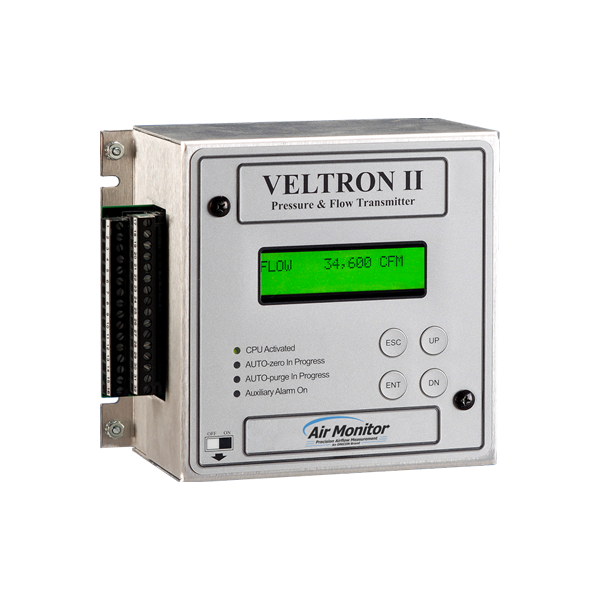
VELTRON II
Product Type: Differential Pressure and Flow Transmitter
Technology Type: Ultra-low range DP & Flow Transmitter with Auto Zero
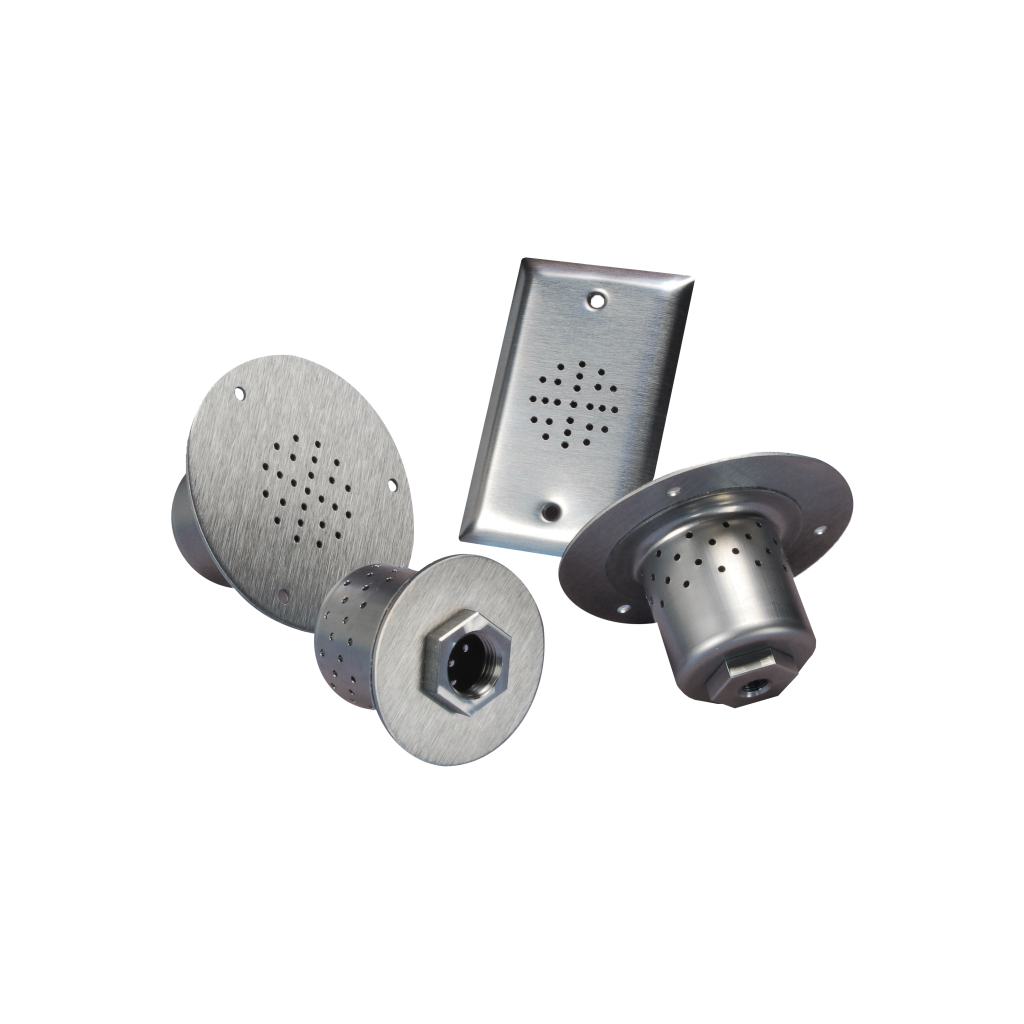
S.A.P.
Product Type: Static Pressure Sensor
Technology Type: Static Air Pressure Sensor
Sensors for Flow and Pressure
Each device is used in conjunction with Air Monitor’s SAP (Static Air Pressure) sensors, which ensure accurate pressure sensing directly at the measurement location. Together, these components form a complete, high-performance solution for data center pressure control.
For facilities aiming to maintain tight control at low differential pressures, this level of accuracy can translate into meaningful gains in energy efficiency, improved thermal stability, and operational savings.
For facilities requiring bulk airflow monitoring across supply ducts and air handling units, Air Monitor offers proven solutions such as the FAN‑Evaluator and VOLU‑probe. These Pitot averaging flow meters use differential pressure principles to provide reliable, cost-effective measurement across large duct cross-sections.
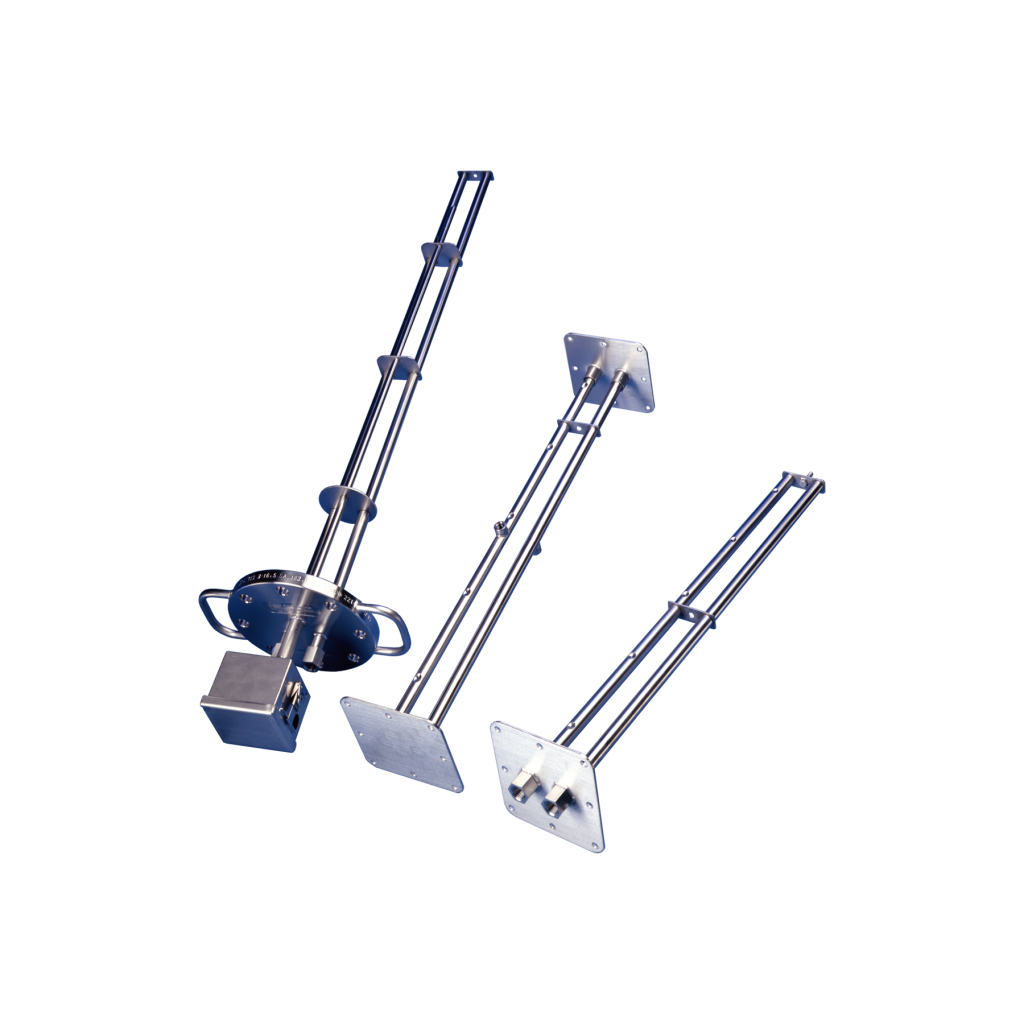
VOLU-probe/SS
Product Type: Insertion Flow Measuring Probe
Technology Type: Differential Pressure Pitot Airflow Traverse Probe
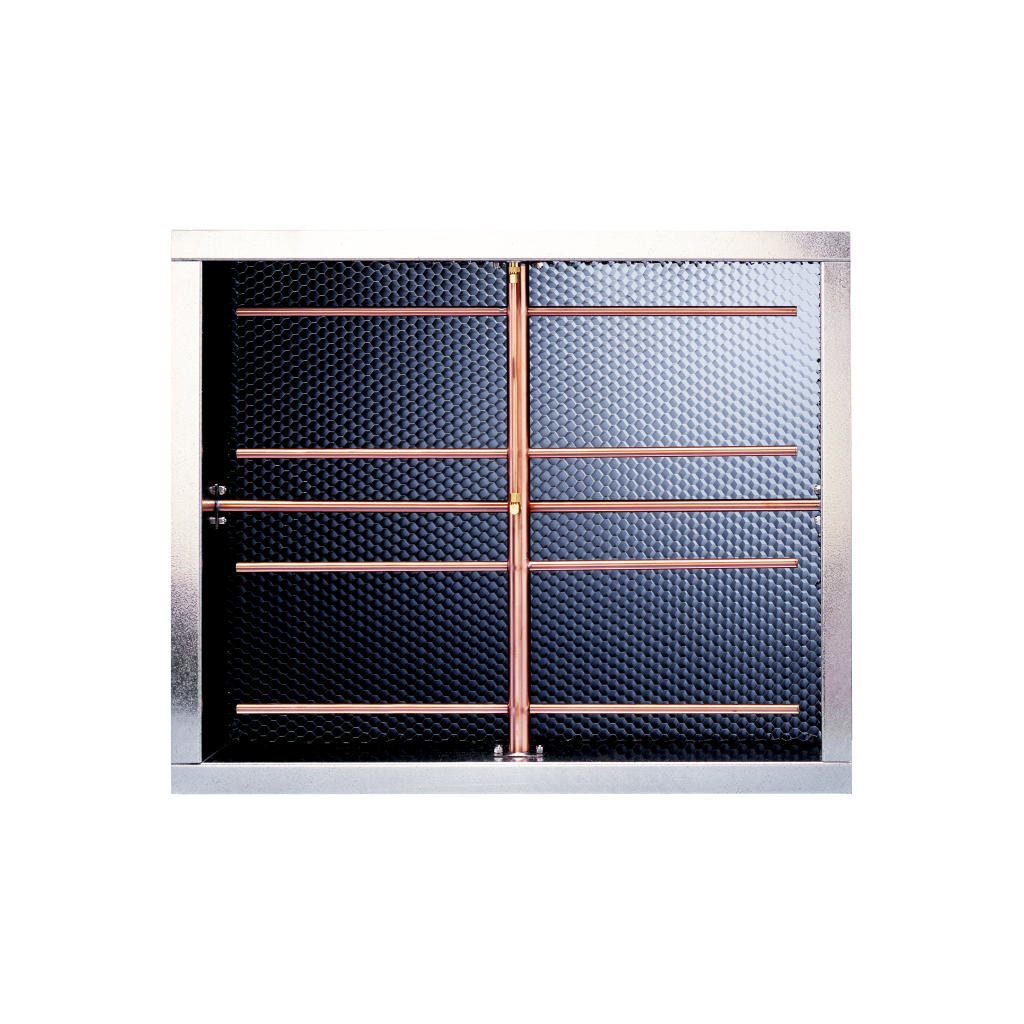
FAN-Evaluator
Product Type: Flow Measuring Inline Station with Flow Conditioner
Technology Type: Pitot Airflow Measurement Traverse Station
Unlike single-point and low sensor density systems, Air Monitor’s multi-point Pitot averaging technology captures true airflow velocity across the entire duct profile—delivering far greater measurement accuracy and repeatability in dynamic operating conditions. When paired with high-performance differential pressure transmitters like the VELTRON II, these systems provide a fully integrated approach delivering the level of measurement integrity required in mission-critical data center environments.
Ready to optimize your data center’s airflow monitoring?
Explore Air Monitor’s data center solutions at airmonitor.com to see how precision differential pressure measurement can reduce energy costs and protect uptime.
Air Monitor has been delivering engineered airflow measurement solutions since 1967. As the premier solutions provider for Commercial HVAC, Industrial Process, and Power Generation markets, Air Monitor offers both differential pressure and thermal dispersion measurement technologies — because the right technology for the right application is never one-size-fits-all. Learn more at airmonitor.com.
Frequently Asked Questions
A: ASHRAE Standard 90.4 is the primary regulation, establishing minimum energy efficiency and HVAC design requirements for data centers. It has been incorporated into the IECC and adopted by several U.S. states as a mandatory compliance path. ASHRAE’s environmental guidelines also specify temperature ranges (18°C–27°C recommended), humidity limits, and air filtration standards (MERV 8 minimum) that must be addressed during facility design and construction.
A: The single most critical factor is preventing hot exhaust air from mixing with cold supply air. When hot and cold airstreams mix, cooling systems must work up to four times harder to maintain the same thermal load. Hot aisle/cold aisle containment, combined with continuous differential pressure monitoring, is the most effective strategy for maintaining separation and validating that the containment system is performing correctly.
A: Differential pressure sensors monitor the pressure differential between hot and cold aisles, confirming that cold air is being delivered to server intakes and hot air is being efficiently removed. Precise pressure data allows facility managers to fine-tune cooling airflow — reducing fan energy, avoiding overcooling, and catching containment leaks before they escalate into thermal events.