
Part 3: The Integrated Airflow Solution—System Architecture, Applications, and ROI
In Part 1 and Part 2, we explored pitot averaging technology and the critical challenges posed by dirty, particulate-laden industrial airflows. Pitot averaging with AUTO-Purge is the next step for combating dirty airflow systems. In this last part of the series, we bring these elements together into a comprehensive, engineered solution that delivers continuous, reliable airflow monitoring even in the harshest industrial environments.
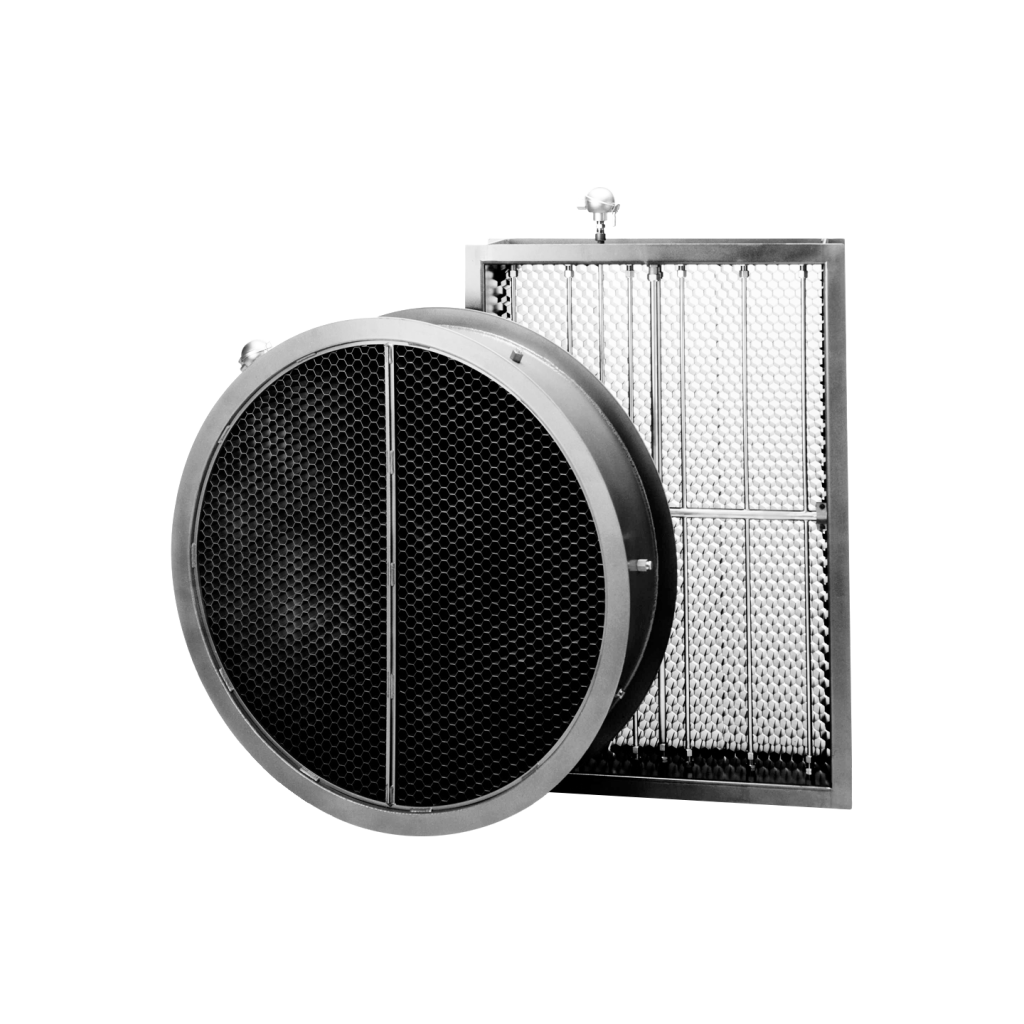
How the Integrated System Works
When Air Monitor’s pitot averaging flow stations are paired with the AUTO-purge III system, they create a comprehensive, end-to-end airflow monitoring solution specifically tailored to dirty or particulate-laden environments. Here’s how the integrated system functions:
System Components
Averaging Pitot Probes/Stations: Multiple pressure sensing ports mounted at optimized locations along the probe capture dynamic and static pressure across the ductwork cross-section, automatically averaging velocity and reducing the impact of flow disturbances.
Differential Pressure Transmitter: A high-precision transmitter converts the differential pressure into an electronic signal (typically 4-20 mA or digital output) proportional to airflow velocity.
AUTO-Purge III Purge System: An intelligent control module manages purge timing, duration, and air/gas supply based on sensor configuration and facility preferences—either timed intervals or demand-based activation.
Purge Supply System: A regulated source of clean, dry compressed air or inert gas (nitrogen for safety-critical applications) feeds the purge controller.
Ductwork Installation: The averaging pitot probe or station is installed in a straight section of ductwork, upstream or downstream of a major dust-generating process where reliable airflow data is critical for process control and regulatory compliance.
Continuous Measurement Workflow
1 – Continuous Sensing: The averaging pitot station captures dynamic and static pressure continuously as air flows through the duct, automatically averaging across multiple pressure taps to yield a representative velocity measurement.
2 – Purge Cycles: At programmed intervals, the AUTO-purge III injects a sustained blowback of clean compressed air through internal sensing paths, sweeping away any particulate and moisture before they accumulate.
3 – Real-Time Airflow Calculation: The transmitter converts differential pressure into mass or volumetric airflow in real-time, accounting for temperature, pressure, and gas density if needed.
4 – System Integration: Airflow data is transmitted to facility control systems, baghouse controllers, or monitoring platforms for real-time process optimization, regulatory compliance documentation, predictive maintenance alerts, and historical data logging.
5 – Minimal Maintenance: Because AUTO-purge III keeps the probe clean, maintenance is reduced to occasional checks of purge gas supply and recalibration during planned shutdowns—far less frequent than conventional probes in dirty environments.

Real-World Applications
Cement and Concrete Plants
Measurement Points: Kiln airflow, baghouse inlet velocity, and clinker cooler inlet/outlet air.
Challenge: Cement dust is fine, sticky, and hygroscopic—it loves moisture and can adhere to sensor surfaces.
Benefit: Real-time feedback enables operators to balance baghouse cleaning cycles, adjust fan speed for minimal energy use, and document continuous compliance with NESHAP/MACT standards and regional cement emission limits. Facilities report 5–15% energy savings through optimized fan operation alone.
Materials Handling and Dust Collection
Measurement Points: Inlet and outlet airflow from multi-stage baghouse systems connected to silos, mills, and conveyor systems.
Challenge: Ultra-fine dust concentrations (often 100+ mg/m³ at baghouse inlets) overwhelm conventional sensors within days.
Benefit: AUTO-purge III keeps probes functional even in particulate-laden inlet streams. Operators quickly detect filter blinding, duct leaks, or fan failures and respond before emissions spike or production halts. Reduced unplanned downtime translates directly to improved throughput and compliance records.
Coal-Fired Power Generation
Measurement Points Primary air, secondary air, individual burner air, over-fire air, total air, flue gas to carbon capture, and stack monitoring systems.
Challenge: Coal dust is abrasive and corrosive, creating one of the challenging measurement environments in industrial process control.
Benefit: Averaging pitot technology captures true airflow despite turbulence and flow disturbances from mill discharge. AUTO-purge III prevents coal dust accumulation, enabling reliable long-term ESP (electrostatic precipitator) or baghouse monitoring for emission compliance.
Industrial Process Exhaust Monitoring
Measurement Points: Pharmaceutical, chemical, or food processing facilities with high-particulate or corrosive vapor exhaust streams routed through baghouses or scrubbers.
Benefit: Continuous airflow data supports process control and emissions compliance while AUTO-purge III tolerates sticky residues or corrosive dust that would rapidly foul conventional sensors.
Key Advantages Over Alternative Technologies
Airflow technology comparison table:
| Measurement Method | Accuracy | Fouling Resistance | Maintenance Burden | Suitable for Dirty Air? |
|---|---|---|---|---|
| Manual Pitot + Manometer | ±3–5% | Low—requires frequent cleaning | High—labor intensive | No—impractical for continuous use |
| Differential Pressure Gauge | ±2–3% (indirect) | Medium | Medium | Partially—indirect measurement unreliable |
| Thermal Anemometer | ±2–3% | Very Low—clogs in dust | Very High—frequent replacement | No—fails rapidly |
| Electronic Sensor (unprotected) | ±1–2% | Very Low | Very High—weeks to failure | No—sensor fouls immediately |
| Pitot Averaging + AUTO-Purge III | ±1–3% | Excellent—active fouling prevention | Low—proactive cleaning | Yes—engineered for harsh conditions |
Return on Investment: The Numbers Behind the Solution
While initial investment in pitot averaging + AUTO-purge III exceeds basic differential pressure gauges or manual measurements, the payback comes through several channels:
Reduced Maintenance Interventions: Conventional sensors in dirty environments require probe removal, cleaning, and verification every 2–4 weeks. At $500–$1,000 per intervention (labor, production disruption), annual maintenance costs reach $13,000–$26,000. AUTO-purge III systems eliminate 80–90% of these interventions, recovering investment within 2–3 years.
Elimination of Probe Replacement: Fouled probes require calibration verification or complete replacement ($2,000–$4,000 each). Facilities implementing AUTO-purge III experience 50–75% fewer replacement cycles over 5 years, saving $15,000–$30,000.
Optimized Fan Operation: Real-time airflow data allows operators to identify and correct inefficient fan operation. Reducing fan speed by just 10% (via variable frequency drive adjustment) based on actual airflow monitoring reduces energy consumption by ~27% due to the cubic relationship between speed and power. For a 50 kW baghouse fan, this represents $5,000–$10,000 annual energy savings.
Avoided Compliance Violations: Continuous airflow documentation provides irrefutable compliance records. Facilities avoiding even one notice of violation or fine (which can reach $10,000–$50,000+) recover the entire system investment.
Reduced Unplanned Downtime: Predictive maintenance alerts allow scheduled maintenance instead of emergency repairs. Avoiding even two emergency service calls per year (at $2,000–$5,000 each) provides substantial ROI.
Typical Payback Calculation (assuming a $25,000–$35,000 installed system cost):
- Maintenance reduction: $10,000–$15,000/year
- Energy optimization: $5,000–$10,000/year
- Compliance and downtime avoidance: $5,000–$15,000/year
- Total annual savings: $20,000–$40,000
- Payback period: 1–2 years
Over a 10-year system lifespan, facilities typically realize $150,000–$300,000 in cumulative value—a return multiple of 5–10x the initial investment.
Integration with Modern Systems
Today’s industrial facilities demand seamless integration with existing control infrastructure. AUTO-purge III systems deliver:
Standard Communication Protocols: Transmitter outputs integrate via 4–20 mA analog signals or Modbus RTU protocols, enabling seamless connection to baghouse pulse-jet controllers, distributed control systems (DCS), facility-wide energy monitoring platforms, and remote cloud-based dashboards.
Historical Data and Trending: Continuous monitoring enables trend analysis, seasonal pattern recognition, and long-term performance benchmarking—insights impossible with episodic manual measurements.
Why Air Monitor’s Solution Stands Out
Air Monitor has been delivering airflow measurement solutions since 1967, establishing deep expertise in differential pressure technology. The company’s commitment to matching the right technology to the right application—rather than forcing a one-size-fits-all approach—shines through in the engineering of pitot averaging flow stations paired with AUTO-purge III.
Air Monitor’s approach emphasizes:
Application-Specific Design: Understanding dust characteristics, temperature profiles, and regulatory drivers unique to each facility.
Proven Reliability: Decades of field experience in cement plants, power generation, and materials handling.
Total Solution Integration: Not just selling sensors, but partnering to design ductwork layouts, specify transmitter ranges, integrate control communications, and establish maintenance protocols.
Engineered Solutions: Commitment to engineering purpose-built solutions rather than generic components.

The Path Forward
Pitot averaging flow stations with AUTO-purge III represent the engineered solution for facilities demanding reliable, accurate airflow monitoring in dirty, particulate-laden environments. By combining proven averaging pitot technology with proactive sensor protection, this system delivers unmatched accuracy, minimal maintenance burden, continuous regulatory compliance, and lower total cost of ownership.
For cement plants, power generators, materials handling facilities, and any industrial operation where accurate airflow measurement drives both safety and profitability, this solution stands as the industry standard.
Ready to optimize your airflow monitoring system?
Contact Air Monitor to discuss your specific application, facility layout, and regulatory requirements. Learn how continuous, reliable airflow measurement can transform process efficiency and regulatory compliance in your operation.